


In-flight transmission of SARS-CoV-2.
Choi EM, Chu DKW, Cheng PKC, Tsang DNC, Peiris M, Bausch DG, Poon LLM, Watson-Jones D.
Emerg Infect Dis. 2020 Nov;26(11):2713-2716.
PMID: 32946370
PMCID: PMC7588512
Learning from people with HIV: Their insights are critical to our response to the intersecting COVID-19 and HIV pandemics in Africa.
Aristide C, Okello S, Bwana M, Siedner MJ, Peck RN.
AIDS Behav. 2020 Dec;24(12):3295-3298.
DOI: 10.1007/s10461-020-02955-6. PubMed
PMID: 32607916; PubMed Central
PMCID: PMC7325644.
Nocturnal dipping of heart rate and blood pressure in people with HIV in Tanzania.
Nolan C, Reis K, Fadhil S, Etyang A, Ezeomah C, Kingery JR, Desderius B, Lee MH, Kapiga S, Peck RN.
PMID: 34080288.
DOI: 10.1111/jch.14300.
Does the number of doses matter? A qualitative study of HPV vaccination acceptability nested in a dose reduction trial in Tanzania.
Mitchell KR, Erio T, Whitworth HS, Marwerwe G, Changalucha J, Baisley K, Lacey CJ, Hayes R, de SanJosé S, Watson-Jones D.
PMID: 34051389
PMCID: PMC8233223
Background
Gender-based violence is prevalent globally.
It occurs in many forms, including intimate partner violence, rape and coerced sex, child sexual abuse, and human trafficking. Such forms of gender-based violence are significant risk factors for poor health, impacting on individuals’ physical, sexual and psychological health, as well as their social and economic well-being.
Evidence from rigorously conducted research is essential to ensuring that policies and services to prevent and respond to violence are well-designed and appropriate to the context where women, children, adolescents and men live. Conducting action-oriented research on gender-based violence that is robust and carried out in ethical and safe ways requires specific methodological approaches.
The course
This course aims to strengthen participants’ knowledge and skills to conduct or commission technically rigorous, ethical and policy- and service-relevant research on various forms of violence against women, children and adolescents.
It is intended for individuals who will conduct or commission research on gender-based violence. It will be of particular interest to those who want to add a ‘violence component’ to a study that is quantitative or qualitative or an intervention evaluation.
It is relevant for individuals working on health-related topics such as sexual and reproductive health, maternal health, HIV, mental health and substance use.
The course will be taught through a series of online interactive lectures, practical exercises, group work and assigned reading.
Course content
The course will cover topics including:
- Conceptualising and researching various forms of gender-based violence
- Associations between violence and health: current knowledge
- Ethics and safety
- Approaches to researching violence: qualitative, quantitative, mixed methods, intervention research
- Developing conceptual frameworks for violence and health research
- Survey research on violence and questionnaire design
- Intervention research: approaches and challenges
- Violence research in health care settings
- Violence research in humanitarian settings
Key information
Course Organisers:
Dr Karen Devries, Dr Cathy Zimmerman and Dr Ana Maria Buller
The course will also feature lectures from Prof Charlotte Watts and visiting staff from other universities.
Duration: 17-28 May 2021
Fees for 2021: £850
Contact email: shortcourses@lshtm.ac.uk
Find out more and apply: www.lshtm.ac.uk/study/short-courses/gender-violence
Colombini M, Scorgie F, Stangl A, Harvey S, Ramskin L, Khoza N, Mashauri E, Baron D, Lees S, Kapiga S, Watts C, Delany-Moretlwe S;
BMC Public Health. 2021 Mar 3;21(1):433.
DOI: 10.1186/s12889-021-10454-z
PMID: 33658000.
Baisley KJ, Whitworth HS, Changalucha J, Pinto L, Dillner J, Kapiga S, de Sanjosé S, Mayaud P, Hayes RJ, Lacey CJ, Watson-Jones D.
Contemp Clin Trials. 2021 Jan 6;101:106266.
DOI: 10.1016/j.cct.2021.106266
PMID: 33421649
Miller L, Morar N, Kapiga S, Ramjee G, Hayes R.
PLoS One. 2021 Jan 7;16(1):e0244652.
DOI:10.1371/journal.pone.0244652
PMCID: PMC7790400

Results from this study highlight the importance of maintaining and increasing vaccine coverage to sustain gains made in reducing deaths related to infectious diseases in low-and middle-income countries.
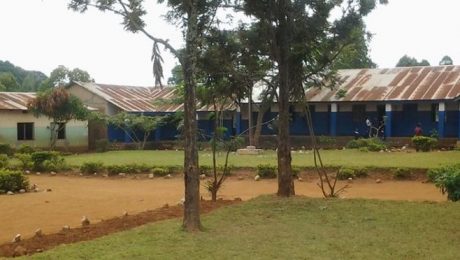

Primary school from Kagera region.
In recent years, handwashing with soap has been gaining recognition as an important practice for maintaining good health. Many international organisations, including the World Health Organization (WHO), have taken part in promoting regular handwashing with soap. This is mainly because current scientific evidence shows that handwashing with soap reduces transmission of infectious agents and is an effective means to prevent infections.
Since the effectiveness of handwashing is well-established, the scientists at the Mwanza Intervention Trials Unit (MITU) are working to include this practice as part of a package of public interventions aiming to combat worm infections among primary school children in Kagera region, northwestern Tanzania. Recently, Dr. Kenneth Makata and his colleagues published an article in PlosOne that describes their work, which uses handwashing with soap as a tool to reduce the burden of common worm infections (namely Ascaris lumbricoides and Trichuris trichiura) in the study population. This article presents results of a survey which was conducted before the implementation of a large study aiming to assess the effectiveness of a range of measures, including handwashing with soap, in reducing the chance of getting new worm infections following mass treatment of school children.

Handwashing facility with painted nudges from one intervention school.
It is interesting to note the innovation that goes into the design of this research project. Dr. Makata and his colleagues installed handwashing facilities close to the latrine building in 8 primary schools taking part in this study in 3 districts of Kagera region.

Each facility had replenishable pieces of soap to be used. The team also painted the pathways linking latrines and handwashing facilities to make them look friendly and to sub-consciously motivate the school children to use the facilities to wash hands. Teacher-led classroom teaching and sessions to involve parents were also provided as part of the package.
“We were very pleased to see school children highly motivated to use the facilities after their installations,” said Dr. Makata who coordinated all activities related to this study in Kagera. “Our study confirms that worm infections among school children are a major health problem in Kagera region”. Results of the main study have been submitted for publication.